
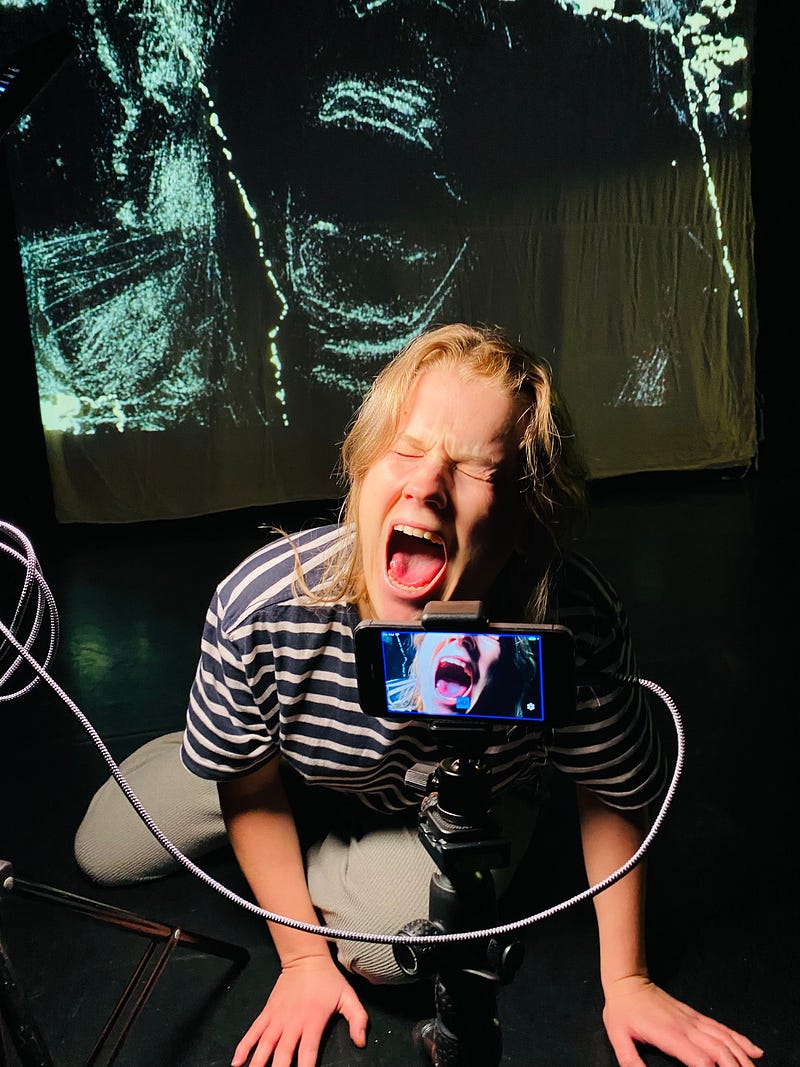
It’s actually not as brutal as it sounds…in early November 2021 I was fortunate to find myself back in a studio theatre space for two days creating some experimental performance work with 5 fabulous individuals. The team: Lizzie Hawes, (dance artist), Sharon Eckman (actor & singer), Jenni Elbourne (audio describer), Kate Collier (BSL interpreter) and video specialist Jim Horsfield.
The idea was to pull together all our expertise in making accessible performance work to create a short piece that would be shared with a focus group of audience members living with a range of sensory impairments. Our (paid) focus group was primed to be frank and honest; to tell us what worked and what didn’t, and provide insight sorely lacking in the early stages of development of many performance projects.

We were working on a scene from Witchfinder, a music theatre piece I am developing inspired by the infamous antics of 17th Century witchfinder Matthew Hopkins. Hopkins used three methods of ‘searching’ — essentially torture — to ascertain whether the unfortunates brought to his attention were witches.
These ‘methods’; pricking, walking and swimming, provided suitably abstract segments that we would need to represent figuratively, and we set about to combine elements of dance, spoken word, BSL, audio description and video projection effects in various combinations.
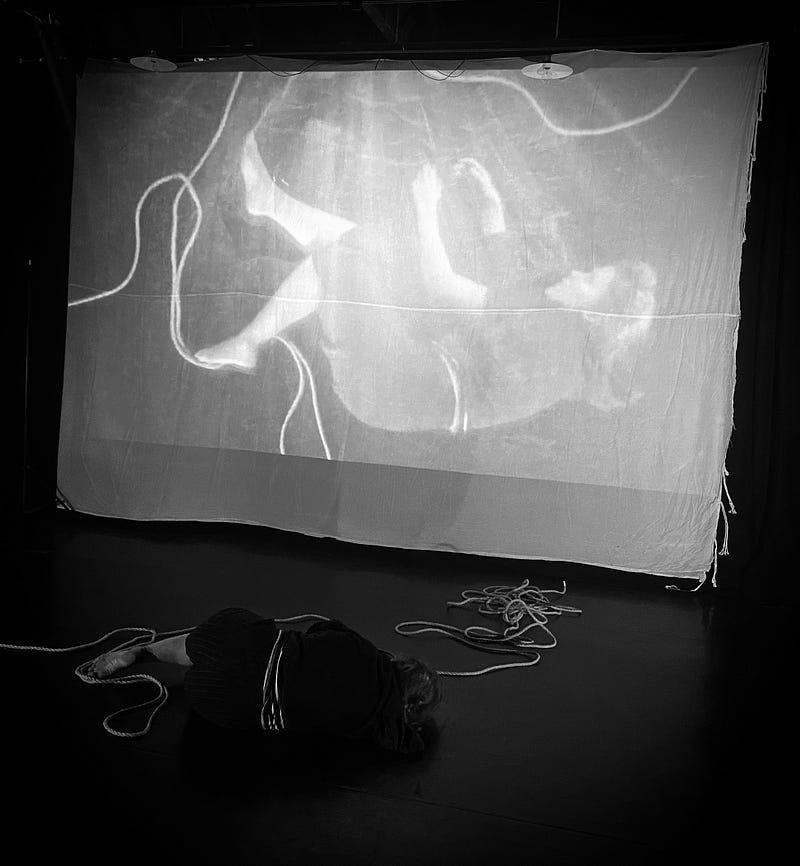
It was a surprisingly natural (and fun) process to put something together from scratch, with ideas freely flowing and a collaborative approach to layering these elements together in various ways to achieve a narrative with enough ‘ways in’ for our diverse audience. We experimented with various video projection techniques, different levels and styles of audio description and BSL, proximity, spacing and pace, to name but a few of the variables at our disposal.
At the end of our two days, a focus group of BSL users, visually impaired and neurodiverse audience members were shown two different versions of the same piece and fed back to us generously and honestly. We supplied the tea and cake, and they told us how it was. As a group of creatives and audience we explored various possibilities and preferences, and shared experiences of other performances and artforms.
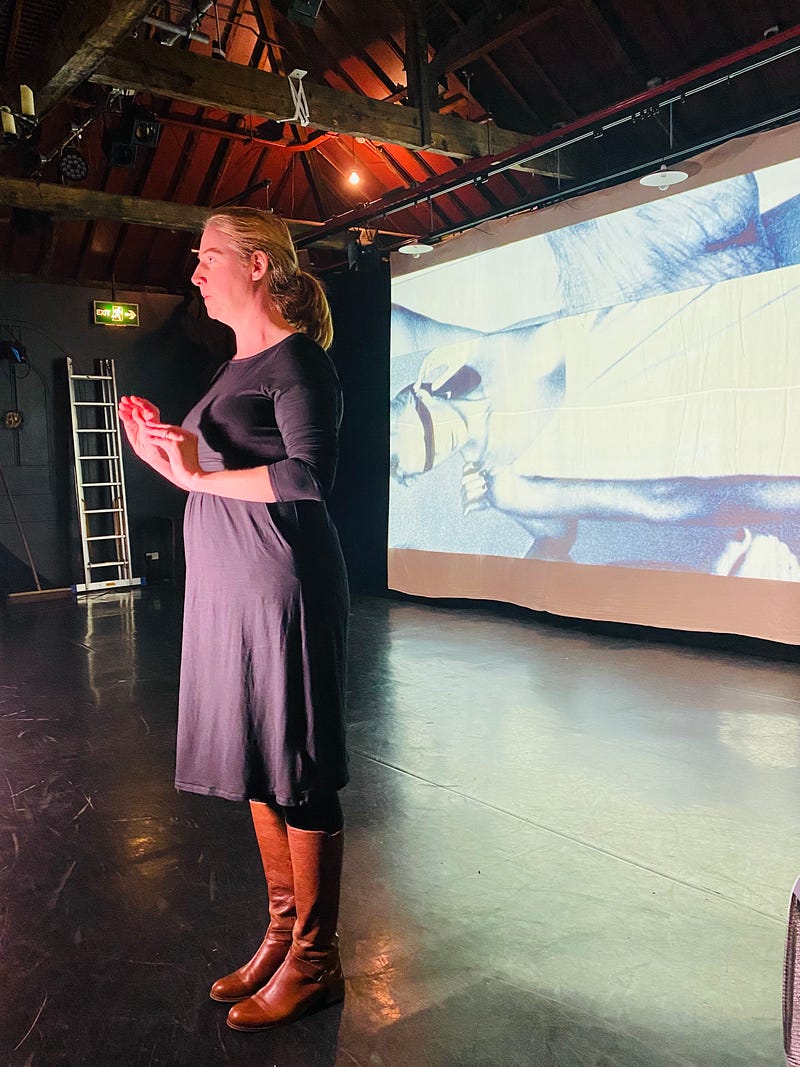
Takeaways from the two days are too numerous to list — not least the sheer joy to be making theatre in an actual space again after the disruption of the pandemic. For me, this cherished time highlighted the value of both audio description and BSL as art forms in their own right; the importance of considering access from the outset and within all stages of the creative process; and the potential of technology to enhance performance experiences for audiences. And most importantly the value of collaboration, trust and a really great team.
